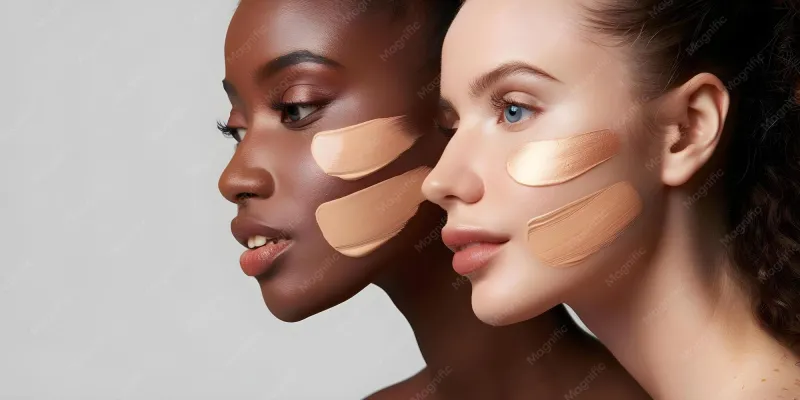
Why Your In-Store Swatches Are Lying to You — And How to Get It Right at Home
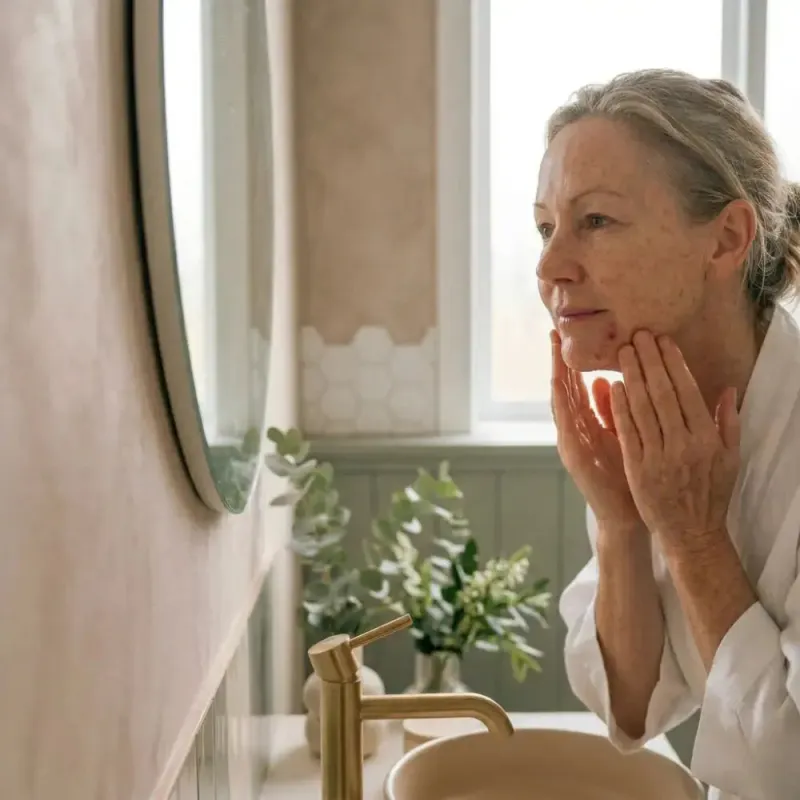
Photo: woman swatching foundation on jawline near window natural light, via genovaskincare.com.au
We've all been there. You're standing at a beauty counter or scrolling through an online swatch grid, trying to figure out which shade is the one. You test it on the back of your hand, it looks like a solid match, you buy it — and then you get home, swipe it on your face, and something is just... wrong. Too pink. Too ashy. Too dark. Too shiny.
This isn't a you problem. It's a swatching problem. And once you understand why traditional swatching fails, you can build a system at home that actually tells you something useful.
The Hand-Swatch Problem Is Bigger Than You Think
Swatching on the back of your hand has become so normalized that most of us don't even question it. But think about what you're actually doing: you're applying a face product to a body surface that has different skin thickness, different undertone visibility, a different oil-to-moisture balance, and a completely different texture than your face.
The back of your hand tends to be drier and often more neutral-toned than your face. Your face has more active sebaceous glands, more visible redness or warmth (especially around the cheeks and nose), and a different skin pH. A foundation that looks like a seamless match on your hand might oxidize into something completely different on your cheeks within an hour.
Add in the lighting situation at most retail stores — which is typically bright, overhead, and often fluorescent or heavily warm-toned — and you've got a recipe for consistently misleading results.
What Store Lighting Is Actually Doing to Your Swatch
Beauty counters are not lit in your favor. Most are designed to make products look flattering and vibrant, not to mimic the mixed natural and artificial lighting you'll actually live your life in. Warm overhead lighting can neutralize undertones that would look obviously wrong in daylight. Bright direct light flattens the appearance of texture, so a foundation that looks smooth in-store might emphasize pores and fine lines under your bathroom vanity at home.
The same principle applies to eyeshadow swatches. That deep burgundy that looked incredibly pigmented under store lights? It might look muddy and flat in your office lighting or washed out in afternoon sun.
The fix isn't avoiding stores entirely — it's knowing that whatever you see in-store is only one data point, and not the most reliable one.
Building Your At-Home Swatching System
The goal of swatching at home is to replicate real-world conditions as closely as possible — the way you'll actually wear the product, in the light you'll actually be seen in. Here's how to build that system.
Step 1: Swatch in the Right Spot
For face products — foundation, concealer, blush, bronzer, contour — swatch directly on your face or neck, not your hand. Specifically:
- Foundation and concealer: Apply a stripe along your jawline and blend it down onto your neck. This is the classic match zone because it bridges your face tone and your body tone.
- Blush and bronzer: Swatch directly on your cheekbone area, where you'd actually wear it.
- Lip products: Swatch on your actual lips, not your hand. The color of your lips and their natural moisture level will affect how any formula reads.
For eyeshadow, swatch on the inside of your wrist (thinner skin, closer to your face tone) or directly on your eyelid over primer.
Step 2: Check It in Multiple Lighting Conditions
Once you've applied your swatch, walk through your home and check it in at least three different lighting environments:
- Natural daylight (stand near a window, not in direct harsh sun)
- Your bathroom lighting (this is where you'll actually do your makeup most mornings)
- Evening indoor lighting (warm bulbs, lamps — this is where you'll wear it out at night)
If a foundation matches in all three? That's a real match. If it looks off in even one, take note — that's going to be your reality.
Step 3: Let It Sit and Oxidize
This step is skipped constantly, and it's responsible for so many bad purchases. Many foundations — especially those with higher oil content or certain pigment bases — oxidize on skin over 20 to 40 minutes. What looks like a perfect match at application can shift noticeably darker or warmer after an hour of wear.
Apply your foundation swatch and go about your business for at least 30 minutes before making a judgment. Do the dishes. Watch TV. Check your email. Then come back and look at it again in natural light. That's your real result.
Step 4: Factor In Your Skin's Chemistry
Your skin's pH, oil production, and even your skincare routine can all affect how a product performs. If you're testing a foundation over a silicone-based primer, the result will be different than over a water-based one. If you have dry skin and you're testing without moisturizer, you're not seeing an accurate picture.
Always swatch over your actual skincare routine — the one you'd wear before applying makeup. That means your moisturizer, your primer if you use one, and your SPF. Products don't exist in a vacuum, and testing them in context gives you far more useful information.
Step 5: Test Blendability, Not Just Color
A swatch is only useful if you also test how the product moves. Does that concealer blend seamlessly or does it drag? Does the foundation look natural when diffused or does it look patchy? Apply a small amount and blend it out the way you normally would — with your fingers, a sponge, or a brush — and observe the finish. A gorgeous color that doesn't blend well is still a product you'll be frustrated with.
A Note on Buying Online
If you're shopping online — which, same — the at-home swatch system becomes your primary tool. Many brands now offer samples or travel sizes before you commit to a full product, and sites like fcmakeupstore.com make it easier to compare shades with detailed product descriptions and community reviews from real shoppers.
When you do take the leap on a full-size product online, look for brands with flexible return policies. Some retailers will accept returns on foundations even if they've been opened and tested — because they know a swatch tells you more than a shade name ever could.
The Takeaway
Swatching is a skill, and most of us were never taught to do it well. By moving your testing to the right location on your body, checking in realistic lighting, giving products time to oxidize, and testing over your actual skincare base, you dramatically increase your chances of landing on products that genuinely work for your skin. Less guessing, fewer returns, and a lot more confidence in every shade you bring home.