Foundation Shades in 2024: Are Beauty Brands Finally Keeping Up — Or Still Leaving You Out?
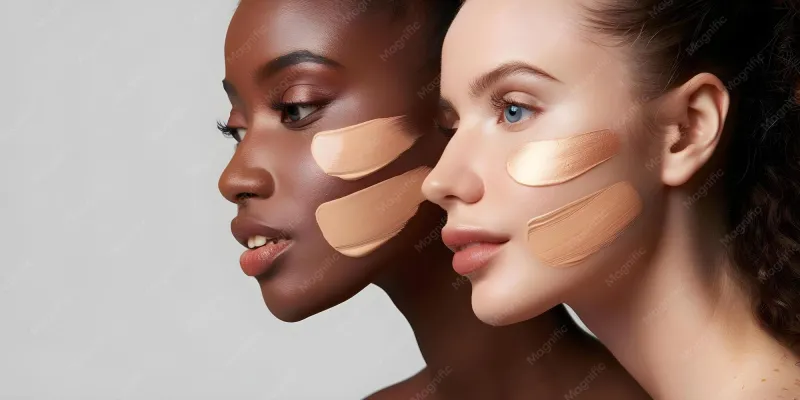
Photo: diverse women different skin tones foundation makeup swatches, via img.freepik.com
It's been several years since Rihanna's Fenty Beauty launched with 40 foundation shades and essentially rewrote the rules of the cosmetics industry. Brands scrambled to expand their lines, social media was full of victory posts, and for a moment, it really felt like things were changing. But here we are in 2024 — and if you've recently stood in the foundation aisle at Sephora or scrolled through a brand's product page wondering if your shade even exists, you already know the truth: the work isn't done.
We talked to makeup artists, brand insiders, and everyday shoppers across different skin tones to get an honest picture of where the beauty industry actually stands on shade inclusivity.
The Progress Is Real — But Uneven
Let's give credit where it's due. Several major players have made genuine strides. Fenty Beauty, of course, set the gold standard and has continued expanding. MAC's Studio Fix line now clocks in at over 60 shades. NYX, NARS, and Maybelline have also broadened their offerings in meaningful ways. For deeper skin tones, options that once felt nonexistent are now at least findable in most mid-range and prestige ranges.
But "findable" isn't the same as "perfect." Makeup artist Danielle Torres, who works with clients in Los Angeles ranging from fair-skinned redheads to deep ebony complexions, puts it bluntly: "A lot of brands added more shades on paper. What they didn't do is test them properly. I'll pick up a shade marked for medium-deep brown skin and it pulls ashy or orange in real life. That's not inclusivity — that's just a number on a box."
The undertone problem is where many brands still stumble. Adding more shades doesn't mean much if those shades don't account for the diversity of warm, cool, and neutral undertones across every depth of skin. Customers with olive skin, for example, consistently report that foundations either look too pink or too yellow — with very little hitting that greenish-neutral sweet spot they actually need.
Who's Still Falling Short?
Without naming every brand in the industry, a pattern does emerge when you look at customer reviews, Reddit threads, and social media feedback: many heritage brands — the ones your mom and grandma used — are lagging. These are companies with loyal customer bases and decades of brand equity, but their foundation ranges often top out around 30 shades, with a suspicious clustering in the light-to-medium zone.
One shopper we spoke with, Tamika, a 34-year-old based in Atlanta with a deep mahogany complexion, described her experience shopping at a department store beauty counter: "The associate literally told me their darkest shade 'might work' if I mixed it with a bronzer. That's not a solution. That's a workaround."
Luxury brands, in particular, have a mixed record. Some prestige lines charge $50+ for a foundation but offer fewer shade options than a $12 drugstore product. That math doesn't add up — and consumers are noticing.
What Brands Are Actually Getting It Right
Beyond Fenty, a few names consistently come up in conversations about genuine inclusivity:
- Mented Cosmetics — founded specifically to fill the gap for women of color, their nude lip shades and complexion products are formulated with deeper skin tones as the starting point, not an afterthought.
- Black Up Cosmetics — a Paris-born brand with serious US presence, designed exclusively for women of color with melanin-rich skin.
- Danessa Myricks Beauty — a professional-grade brand from a celebrated makeup artist that approaches shade matching with real nuance and technical depth.
- e.l.f. Cosmetics — a budget-friendly standout that has consistently punched above its weight on shade diversity without jacking up the price.
What these brands share isn't just a wide shade count — it's an evident investment in who they're formulating for. The difference shows in the finish, the undertone accuracy, and the way the products actually perform on a range of skin tones.
What You Should Be Demanding Right Now
As a consumer, your voice and your wallet carry real power. Here's what makeup artists and beauty advocates say shoppers should be pushing for in 2024 and beyond:
Demand swatches on real skin. Not a white background, not a model with one skin type. Ask brands to show their shades across a full range of complexions on their website and social platforms. If they can't do that, it tells you something.
Call out undertone gaps, not just shade count. Forty shades sounds great until 35 of them are warm-toned and you have a cool complexion. Push brands to diversify within depth ranges, not just across them.
Support brands that prioritize you. Money talks. When you consistently buy from brands that see your skin tone as an afterthought, you're funding that behavior. Redirecting even part of your beauty budget toward inclusive brands sends a message.
Use your platform. A review mentioning that a brand's "deep" shade oxidized orange on your skin is genuinely useful information. Post it. Tag the brand. Beauty companies monitor this stuff — especially when it trends.
The Bottom Line
The good news is that the industry has moved. The not-so-good news is that "moved" doesn't mean "arrived." Shade inclusivity in makeup isn't a checkbox — it's an ongoing commitment that requires investment in formulation, testing across diverse skin tones, and a willingness to listen to customers who've been historically underserved.
At FC Makeup Store, we believe that beauty really is elevated one shade at a time — and that means every shade deserves the same level of care, craft, and availability. If your favorite brand isn't meeting that standard in 2024, it's fair to ask why — and to expect a real answer.