What Cosmetic Chemists Actually Think About Those Little Expiration Symbols on Your Makeup

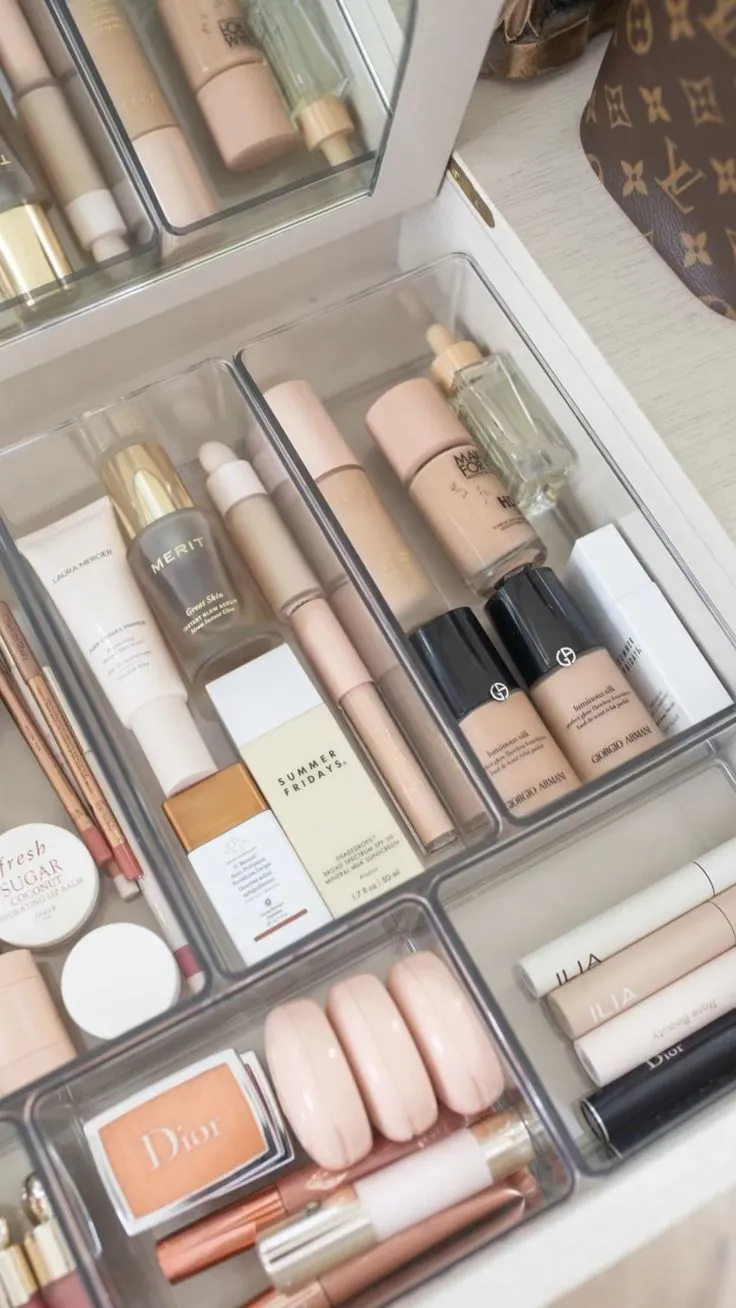
Photo: cosmetic products expiration dates flat lay beauty shelf organization, via thumb-lvlt.xhcdn.com
You know that little symbol on the back of your foundation — the one that looks like an open jar with a number inside it? The "12M" or "24M" stamped in tiny print that sends you into a guilt spiral every time you rediscover a half-used blush from two years ago?
Yeah. That symbol might be misleading you.
Not in a sneaky, corporate cover-up kind of way — but in a "this is more complicated than a single number can capture" kind of way. We talked to cosmetic chemists, dug into the regulatory framework behind these labels, and yes, we even sniffed some vintage eyeshadow palettes in the name of journalism. Here's what we found.
First, What Is That Symbol Even Telling You?
The open-jar icon is called a PAO — Period After Opening. It's a European Union regulatory requirement that became widely adopted by brands selling globally, including most of the big names you'll find at Sephora, Ulta, and your local drugstore. The number inside (12M, 18M, 24M) represents how many months a product is theoretically safe and effective to use after you first open it.
Here's the catch: that number is determined by the manufacturer under controlled lab conditions. Think: a climate-controlled room, consistent temperature, no double-dipping with dirty brushes. Your bathroom in Phoenix in July? A different story entirely.
"PAO dates are essentially a baseline," explains one cosmetic formulation chemist who has worked with multiple mid-size beauty brands. "They represent a kind of average use case. But the variables in real consumer environments are enormous — humidity, heat, how the product is stored, even the bacteria naturally present on an individual's skin can radically change the timeline."
The Variables Nobody Talks About
Your Climate Is Doing a Number on Your Products
If you live somewhere humid — think Houston, Miami, or the Pacific Northwest in winter — your makeup is working harder just to stay stable. Moisture accelerates microbial growth, breaks down emulsions, and causes active ingredients like vitamin C or retinol to oxidize faster. A moisturizing foundation with a printed 12-month PAO might genuinely be done in eight months if it lives on a steamy bathroom shelf.
On the flip side, someone in a dry desert climate storing their products in a cool, dark drawer might safely stretch that same formula closer to 16 months without any real degradation. The product doesn't know what the calendar says — it responds to its environment.
Heat Is the Quiet Killer
Leaving your makeup bag in a hot car, keeping products near a sunny window, or storing them in a bathroom where you take long hot showers — all of these things accelerate the breakdown of preservatives, which are the actual mechanism keeping your products from becoming a petri dish.
Once preservatives degrade, the PAO clock speeds up dramatically. That mascara you bought in January might technically have an 18-month window, but three months in a gym bag that lived in your trunk last summer? Consider it expired.
Your Skin Bacteria Are a Wildcard
This one surprises people. Every time you dip your finger into a cream product, swipe a lip gloss directly onto your lips, or use a product on broken skin, you're introducing microorganisms into the formula. Most modern cosmetics are formulated with broad-spectrum preservative systems designed to handle normal levels of contamination — but everyone's skin microbiome is different.
Some people naturally carry more of the bacteria strains that cosmetic preservatives struggle to neutralize. This doesn't mean anything is wrong with your skin — it just means your personal "use by" window might be shorter than average. If you notice a product changing smell, texture, or color faster than expected, that's your actual data point.
So Which Products Actually Expire vs. Which Are You Tossing Too Early?
Here's where it gets genuinely useful.
Products that really do expire on schedule (or faster):
- Mascara and liquid eyeliner — These go near your eyes, get contaminated with every single use, and live in a warm, dark tube. The 3-month guidance on mascara is one of the few PAO numbers cosmetic chemists actually agree with.
- Liquid foundations and concealers with skin-beneficial actives — If your foundation contains SPF, hyaluronic acid, niacinamide, or vitamin C, those ingredients degrade. The product might still look fine while the actives have long stopped working.
- Cream and liquid products in jars — Direct-contact packaging is the highest contamination risk. Pumps and squeeze tubes are significantly safer.
Products you've probably been throwing away too soon:
- Powder eyeshadows, blushes, and bronzers — Dry formulas with no water content are genuinely hostile environments for microbial growth. A well-made powder palette stored in a cool, dry place can last years beyond its printed date with no safety concern. Vintage palettes from five-plus years ago are regularly tested and found to be microbiologically stable.
- Lipsticks in bullet form — Most bullet lipsticks are primarily wax and pigment with very low water activity. While the oils can eventually go rancid (you'll smell it — think crayons), the safety risk is low. The bigger issue is performance degradation, not danger.
- Pencil eyeliners and lip liners — Every time you sharpen, you're removing the top layer and exposing fresh product. These have a legitimately longer safe lifespan than their PAO suggests.
The Smell Test Is Real (Sort Of)
Your nose is actually a decent quality control instrument. Rancid oils, bacterial contamination, and oxidized preservatives all produce detectable odors. If something smells off — sour, metallic, like old cooking oil — trust that instinct. The same goes for visible changes: separation, color shifts, unusual texture, or anything that looks different from when you first opened it.
That said, some degradation happens without obvious sensory cues, which is why products near your eyes and on broken or sensitive skin deserve stricter scrutiny.
What the Brands Aren't Incentivized to Tell You
Let's be honest about something: manufacturers have a financial interest in conservative PAO dates. Shorter "use by" windows mean more repurchasing. That doesn't make the dates fraudulent — they're genuinely designed with safety margins built in — but it does mean the number on the jar reflects a worst-case scenario more than a typical one.
A cosmetic chemist we spoke with put it plainly: "If a product is stored well and used with clean tools, many formulas are stable well beyond what's printed. The PAO exists to protect the brand from liability and the consumer from worst-case scenarios. It's not a hard cliff."
The Bottom Line for Your Makeup Collection
Stop applying a single rule to your entire beauty stash. Mascara from six months ago? Toss it, no debate. That powder highlighter you've had since 2021 that still looks and smells perfectly fine? Give it a closer look before you throw it out.
Invest in clean application habits — brushes washed regularly, spatulas instead of fingers for jar products, caps replaced tightly — and your products will genuinely last longer. Store your collection away from heat and humidity where possible, and use your senses as a real-time quality check.
The PAO is a starting point, not the final word. Understanding what actually drives product degradation puts you in a much better position than blindly trusting a number stamped on a jar — and it might just save you from tossing a perfectly good eyeshadow palette that has years of life left in it.