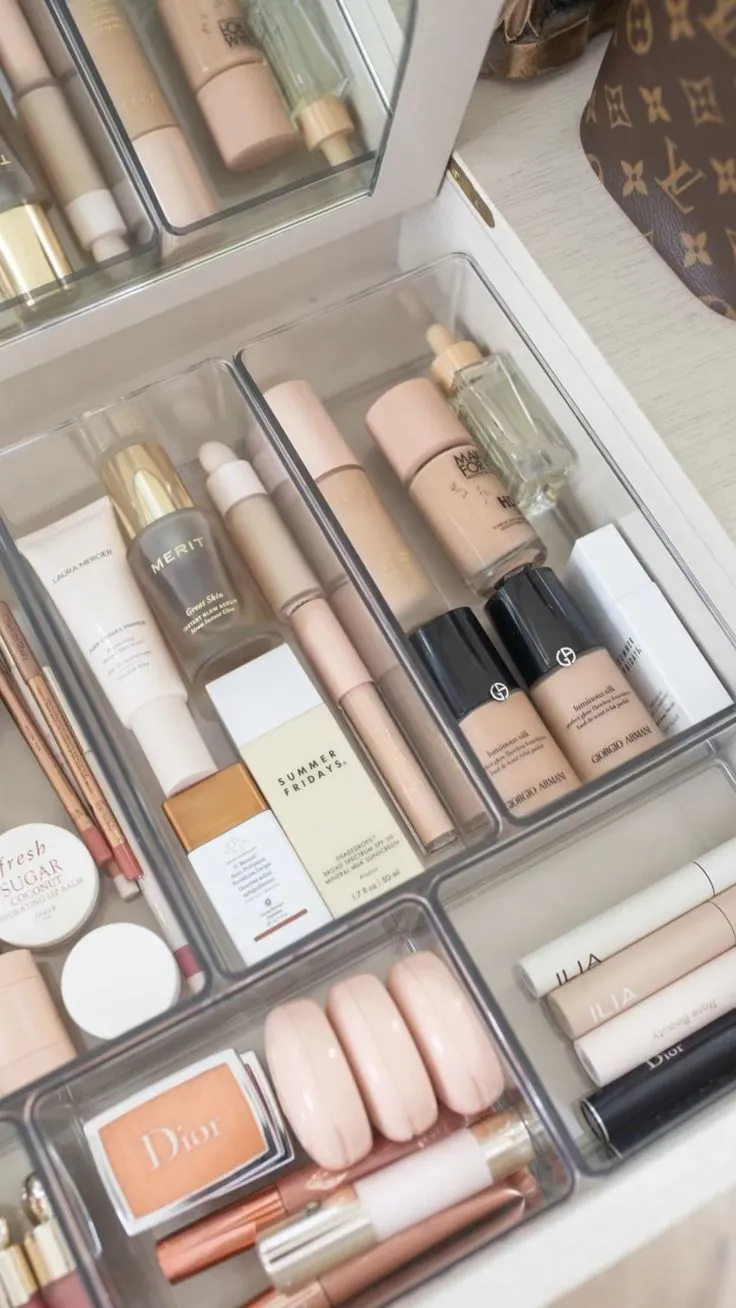
Your Foundation Looks Like Paste — Here's What's Actually Going Wrong (And How to Fix It With What You Already Own)
We've all had that moment. You spend 20 minutes on your base, step into natural light, and catch your reflection looking more like a wax figure than the glowy, blended human you were going for. The finish is thick, patchy, and somehow more noticeable than bare skin. The knee-jerk reaction? Blame the foundation and start shopping for a replacement.
Hold off on that. In most cases, cakey makeup isn't a product failure — it's a process failure. The good news is that the fix is almost always free, because it lives in how you're applying what you already have.
Let's break it down layer by layer.
It Starts Before You Even Pick Up a Brush
Skin prep is the silent saboteur behind more cakey finishes than any formula ever could be. If your skin is even slightly dehydrated when you apply foundation, that formula is going to cling to dry patches, settle into fine lines, and pile up in ways that no blending technique can fully rescue.
The fix isn't complicated: give your moisturizer actual time to absorb. Most of us apply skincare and immediately reach for primer, but that moisture needs at least five to ten minutes to sink in. If you're running late every morning, adjust your skincare timing — not your makeup lineup.
Also worth reconsidering? How much moisturizer you're using. More isn't always better here. A thin, even layer that's fully absorbed creates a smooth canvas. A thick layer that hasn't dried down creates a slippery, unstable base that foundation will slide and bunch on.
Primer Is Often the Culprit, Not the Cure
Primer is supposed to make everything better, but the wrong primer can actually be the reason your makeup looks cakey by noon. Silicone-heavy primers — you know the ones, they feel like silk when you rub them between your fingers — create a smooth initial finish, but they don't always play well with every foundation formula.
If your foundation is water-based and your primer is silicone-based, you're essentially layering two products that don't chemically want to bond. The result is that slipping, pilling, and patchy buildup that looks worse the more you try to blend it.
Before buying a new primer, try this: skip it entirely for a week. For a lot of skin types, a good moisturizer is enough of a base. If you notice your makeup actually performs better without primer, you've just identified the problem without spending a dime.
If you do want a primer in your routine, look at the ingredient list of your current one and compare it to your foundation. Matching the base (both silicone or both water-based) tends to give a more seamless, natural result.
You're Probably Using Too Much Product
This one stings a little, but it's the most common reason for cakey-looking makeup: application quantity. Foundation is not concealer. It's not meant to be built up in thick layers to cover everything. It's meant to even out skin tone while still letting skin look like skin.
If you're going in with a full pump (or more) right off the bat, try cutting your usual amount in half. Apply that lighter layer first, let it settle for 30 seconds, and then — only if you genuinely need more coverage — add a small additional amount only where it's needed. Spot-concealing with your foundation is almost always more effective and more natural-looking than full-face layering.
The same principle applies to concealer. If you're packing it on under the eyes and setting aggressively with powder, you're building a recipe for creasing and caking that no amount of setting spray can fully undo.
Your Powder Routine Needs a Rethink
Powder is often the final nail in the cakey coffin. It's not that powder is bad — it's genuinely great for controlling shine and extending wear — but how most people use it is what creates that thick, heavy finish.
If you're using a fluffy brush and pressing powder into the skin all over your face, stop. Instead, try pressing powder only where you actually get oily: typically the T-zone, the sides of the nose, and the chin. Everywhere else? Leave it alone, or use a very light dusting with a clean brush.
Another underused trick: if your makeup has already gone cakey mid-day, don't add more powder. Instead, lightly press a damp beauty sponge over the problem areas. The moisture reactivates the foundation slightly and compresses everything back together, smoothing out that dry, layered look without adding any new product.
Brush vs. Sponge vs. Fingers — The Tool Really Does Matter
The same foundation can look completely different depending on what you use to apply it. Brushes tend to give more coverage but can leave streaks if the formula is thicker. Damp sponges sheer things out and blend seamlessly into skin. Fingers warm up the product and press it in naturally.
If you've been using a flat brush and ending up with a heavy, mask-like finish, try switching to a damp sponge for your next application. Use a bouncing motion rather than swiping — this presses product into skin rather than dragging it across the surface.
Your current sponge might also need replacing. An old, compacted sponge that hasn't been cleaned recently won't absorb and distribute product evenly, and it can redeposit old product onto fresh makeup. Clean your tools at least once a week. It's one of the most impactful (and free) changes you can make to your application.
Layering Order Is Everything
Here's something that doesn't get talked about enough: the order in which you layer products matters more than the products themselves. Applying concealer before foundation, for example, often leads to concealer getting moved around and looking patchy. Adding blush on top of a heavy powder layer makes it look dusty rather than flushed.
A simple, effective layering order that minimizes caking: moisturizer → primer (if using) → foundation → concealer only where needed → cream products like blush or bronzer → a light powder only on oily zones → setting spray to melt everything together.
That final setting spray step is underrated. A few spritzes of whatever setting spray you already own — even a budget drugstore one — will visually fuse your layers together and give the whole look a more skin-like, cohesive finish. It's the difference between looking made up and looking like your skin just happens to be that good.
The Bottom Line
Cakey makeup is frustrating, but it's almost never a dead end. Before you assume your foundation is the problem, audit your prep routine, your primer compatibility, your product quantities, and your application tools. Nine times out of ten, the fix is already in your collection — it's just waiting for a technique adjustment.
Elevating your makeup game doesn't always mean upgrading your products. Sometimes it means getting smarter about the ones you already love.